SPECS REMOVAL & REFRACTIVE SURGERY
Specs Removal at Perfect Vision Laser Eye Hospital, Jaipur
Freedom from glasses, planned around your eyes and lifestyle.
25000+
Specs Removal Surgeries Performed
Reducing dependence on spectacles and contact lenses can make work, travel, exercise and everyday activities more convenient. Choosing the right procedure begins with understanding your eyes.
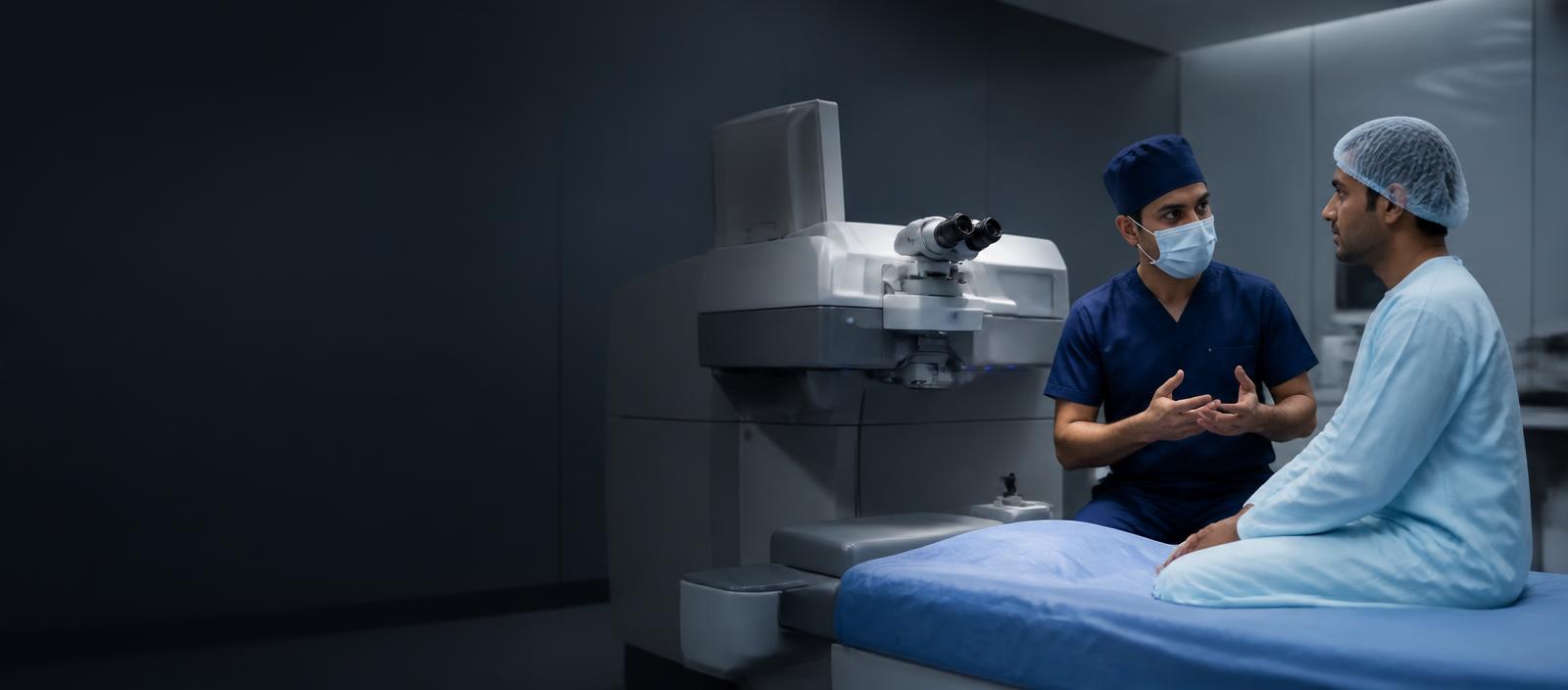
At Perfect Vision Laser Eye Hospital – Dr. Virendra Laser Phaco Surgery Centre, Jaipur, vision-correction options include flap-based LASIK, surface laser treatment, small-incision lenticule extraction and lens-based procedures. Your surgeon recommends suitable options after examining your prescription, cornea, retinal health and visual needs.
What is refractive surgery?
Refractive surgery improves the eye’s focusing ability to reduce dependence on glasses or contact lenses. Depending on the procedure and individual suitability, it can address:
Myopia
Minus power, commonly causing blurred distance vision.
Hyperopia
Plus power, which can affect near and sometimes distance vision.
Astigmatism
Cylindrical power that causes blurred or distorted vision.
Presbyopia
Age-related difficulty focusing up close, requiring a separate discussion about near-vision options.
Some procedures reshape the cornea, while others add or replace a lens inside the eye.
Specs removal videos
डॉ. विरेंद्र के साथ विज़न करेक्शन के विकल्प समझिए
Watch on YouTubeDr. Virendra Agrawal's Expert Guide to Removing Glasses
Watch on YouTubeWhat is LASIK all about?
LASIK stands for Laser-Assisted In Situ Keratomileusis. It reshapes the cornea—the transparent front surface of the eye—to help light focus more accurately on the retina.
Your surgeon creates a thin corneal flap, lifts it and uses an excimer laser to remove a precisely calculated amount of underlying tissue. The flap is then repositioned.
LASIK can correct suitable prescriptions involving myopia, hyperopia and astigmatism. Although “LASIK” is sometimes used broadly for spectacle-removal treatment, PRK, Epi-LASIK, SMILE pro, SiLK and ICL are distinct procedures.
Who may be a candidate?
You may be considered for laser vision correction if:
- You are an adult who meets the selected procedure’s age requirements.
- Your spectacle prescription has remained stable, usually for at least one year.
- Your cornea has suitable thickness and shape.
- Your tear film and eye surface are sufficiently healthy.
- Your prescription falls within an appropriate treatment range.
- You understand the expected recovery, benefits and limitations.
Your occupation, screen use, night-driving requirements and participation in contact sports also help guide the recommendation.
When might surgery need to wait?
A changing prescription, pregnancy, breastfeeding, untreated dry eye, active infection or a medical condition affecting healing may require postponement.
Keratoconus, suspicious corneal scans and certain other eye conditions may make corneal laser treatment unsuitable. Every alternative requires its own assessment.
Types of Laser Vision Correction Options
1. Flap-Based LASIK
This category includes conventional blade-assisted LASIK and Femto-LASIK. Both use an excimer laser to reshape tissue beneath a corneal flap.
Conventional LASIK — Blade-Assisted
A precision instrument called a microkeratome creates the flap using a blade. Your surgeon lifts the flap, performs the excimer laser correction and repositions it.
This approach requires adequate corneal thickness, a suitable corneal shape and an eligible prescription.
Femto-LASIK — All-Laser LASIK
Femto-LASIK uses:
- A femtosecond laser to create the flap.
- An excimer laser to perform the vision correction.
It is often called “100% laser” or “bladeless LASIK” because both flap creation and corneal reshaping use lasers. Your surgeon still lifts and repositions the flap.
Femto-LASIK remains a flap-based procedure. “Bladeless” does not mean “flap-free.”
Recovery considerations
LASIK generally offers relatively quick functional visual recovery. Dryness, glare and fluctuating vision may occur, and both methods involve flap-related considerations.
2. Surface Laser Procedures
PRK and Epi-LASIK reshape the cornea without creating a deeper LASIK-style flap. They differ in how the thin outer layer, called the epithelium, is managed before treatment.
PRK — Photorefractive Keratectomy
In PRK, the surface epithelium is removed and an excimer laser reshapes the tissue underneath.
A protective bandage contact lens is usually placed over the eye while the surface grows back. Your surgeon removes this lens when healing is sufficient.
PRK may be considered where avoiding a flap is appropriate. It still removes corneal tissue, so satisfactory thickness and shape remain essential.
Epi-LASIK — Epithelial Surface Treatment
Epi-LASIK uses a specialised instrument called an epikeratome to separate a thin sheet of epithelium. An excimer laser then performs the correction on the exposed corneal surface.
Depending on the technique, the epithelial sheet may be repositioned or removed. A bandage contact lens supports early healing.
Despite its name, Epi-LASIK is a surface procedure. It does not create the deeper flap used in conventional LASIK or Femto-LASIK.
Recovery considerations
PRK and Epi-LASIK generally involve more discomfort during early healing and slower initial visual recovery than LASIK. Prescribed drops and follow-up visits are important.
A thin cornea does not automatically make either procedure suitable.
3. Lenticule-Based Procedures
SMILE pro and SiLK use a femtosecond laser to create a precisely shaped piece of tissue, called a lenticule, inside the cornea.
The surgeon removes this tissue through a small incision to change the cornea’s focusing power. Neither requires a LASIK-style flap or an excimer laser for the primary correction.
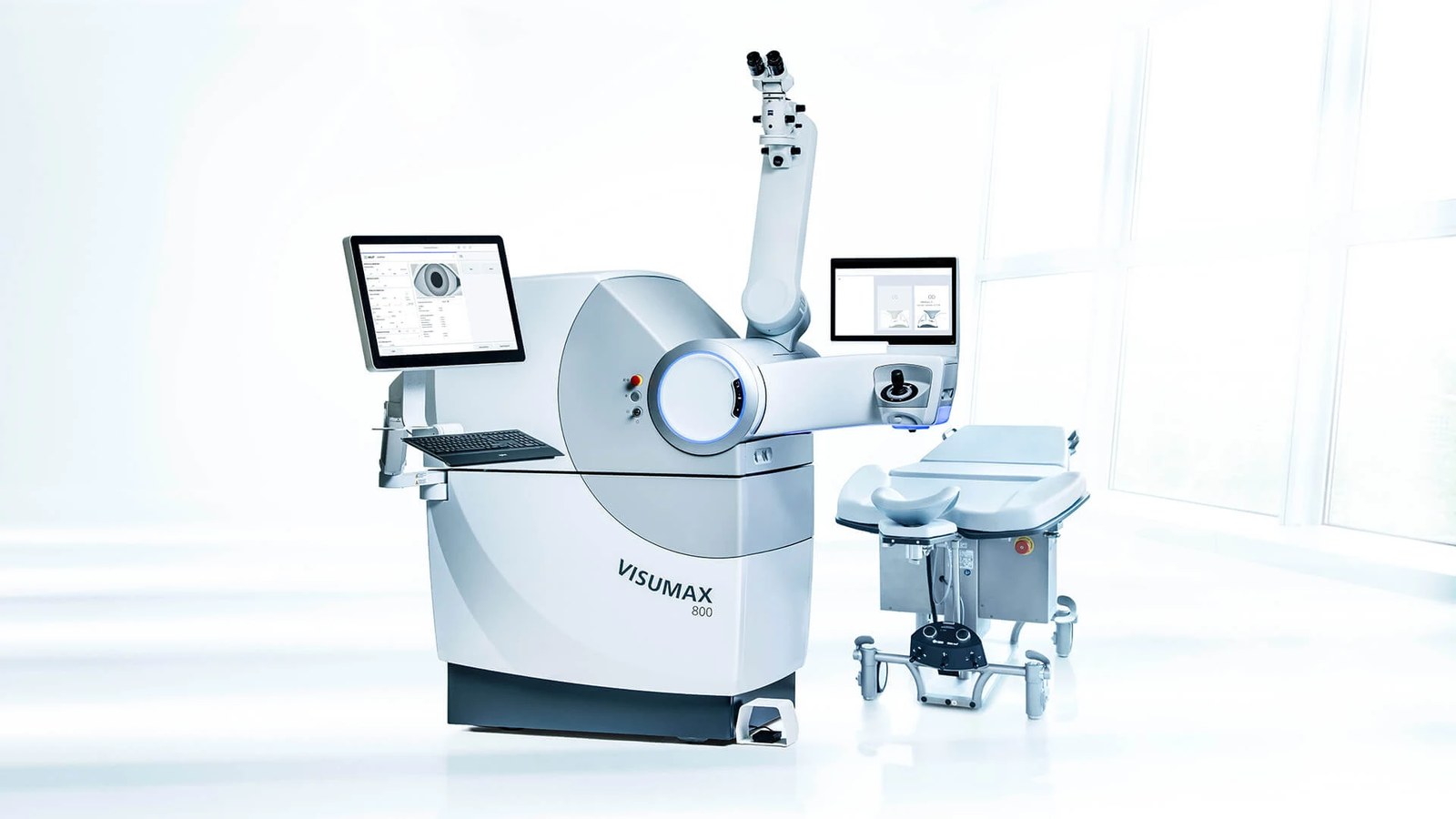
SMILE pro with ZEISS VISUMAX 800
SMILE pro uses the ZEISS VISUMAX 800 femtosecond laser for lenticule creation.
The platform includes CentraLign® assistance for centring and OcuLign® assistance for rotational alignment. These digital features support the surgeon during treatment positioning.
Eligibility depends on the prescription, corneal findings and applicable treatment software and approvals. Where described as “with AI,” the documented assistance involves computer-supported guidance; the surgeon remains responsible for treatment.
Johnson & Johnson Vision's ELITA SiLK
SiLK uses the ELITA femtosecond laser platform to create a biconvex lenticule, with curved surfaces on both sides.
Its closely spaced laser spots and low-energy pulse delivery are designed to support smooth tissue separation. Your surgeon removes the lenticule through a small incision.
SiLK is an option for eligible patients with myopia, with or without astigmatism.
Recovery considerations
Both procedures offer a small-incision approach without a LASIK flap. Recovery varies, and dryness, glare, residual prescription or other complications can still occur.
Laser Vision Correction at a Glance
| Category | Procedures | How vision is corrected |
|---|---|---|
| Flap-based LASIK | Conventional LASIK and Femto-LASIK | Excimer laser reshaping beneath a blade-created or laser-created flap. |
| Surface laser treatment | PRK and Epi-LASIK | Excimer laser reshaping after the epithelium is removed or separated. |
| Lenticule-based treatment | SMILE pro and SiLK | Removal of laser-created tissue through a small incision. |
Lens-Based Alternatives
Implantable Collamer Lens — ICL
ICL surgery adds a lens behind the iris and in front of the natural lens. It does not remove corneal tissue for correction.
It may suit selected higher prescriptions or patients unsuitable for corneal laser surgery. Internal eye space, endothelial cell health and lens sizing require careful assessment.
Refractive Lens Exchange
This replaces the natural lens with an artificial intraocular lens. It may be considered for selected patients with age-related focusing changes or other lens-related needs.
It permanently removes the natural lens and has different risks and trade-offs from corneal procedures.
How is your treatment selected?
Detailed measurements
Testing may include refraction, corneal tomography, corneal thickness measurement, tear-film assessment, pupil measurements and a dilated retinal examination. Lens-based procedures require additional internal eye measurements.
Procedure matching
Your surgeon considers which options meet the requirements for each eye, including the amount of corneal tissue remaining after treatment.
Expectation setting
You discuss likely recovery, possible side effects, residual prescription, near-vision changes and alternatives before deciding. Spectacles and contact lenses remain valid options.
Benefits and important considerations
Successful treatment can reduce reliance on glasses or contact lenses and simplify daily activities. However, no procedure guarantees 6/6 vision or complete lifelong spectacle independence.
Possible concerns include dryness, glare, halos, fluctuating vision and residual prescription. Less common complications can permanently affect sight. Lens-based procedures carry additional risks associated with surgery inside the eye.
Recovery and aftercare
Use prescribed drops and attend scheduled reviews. Avoid rubbing your eyes and follow instructions about water exposure, makeup, exercise and swimming.
Returning to work or driving depends on your recovery and visual demands. Contact the centre promptly if pain increases or vision deteriorates.
Why choose Perfect Vision Laser Eye Hospital, Jaipur?
- Surgeon-led assessment and personalised treatment planning.
- Detailed diagnostic evaluation before recommending surgery.
- Corneal and lens-based options considered according to suitability.
- Comprehensive eye care at one Jaipur centre.
- Support for patients travelling from Rajasthan and beyond.
- Cashless mediclaim assistance, subject to eligibility and policy terms.
Your specialists
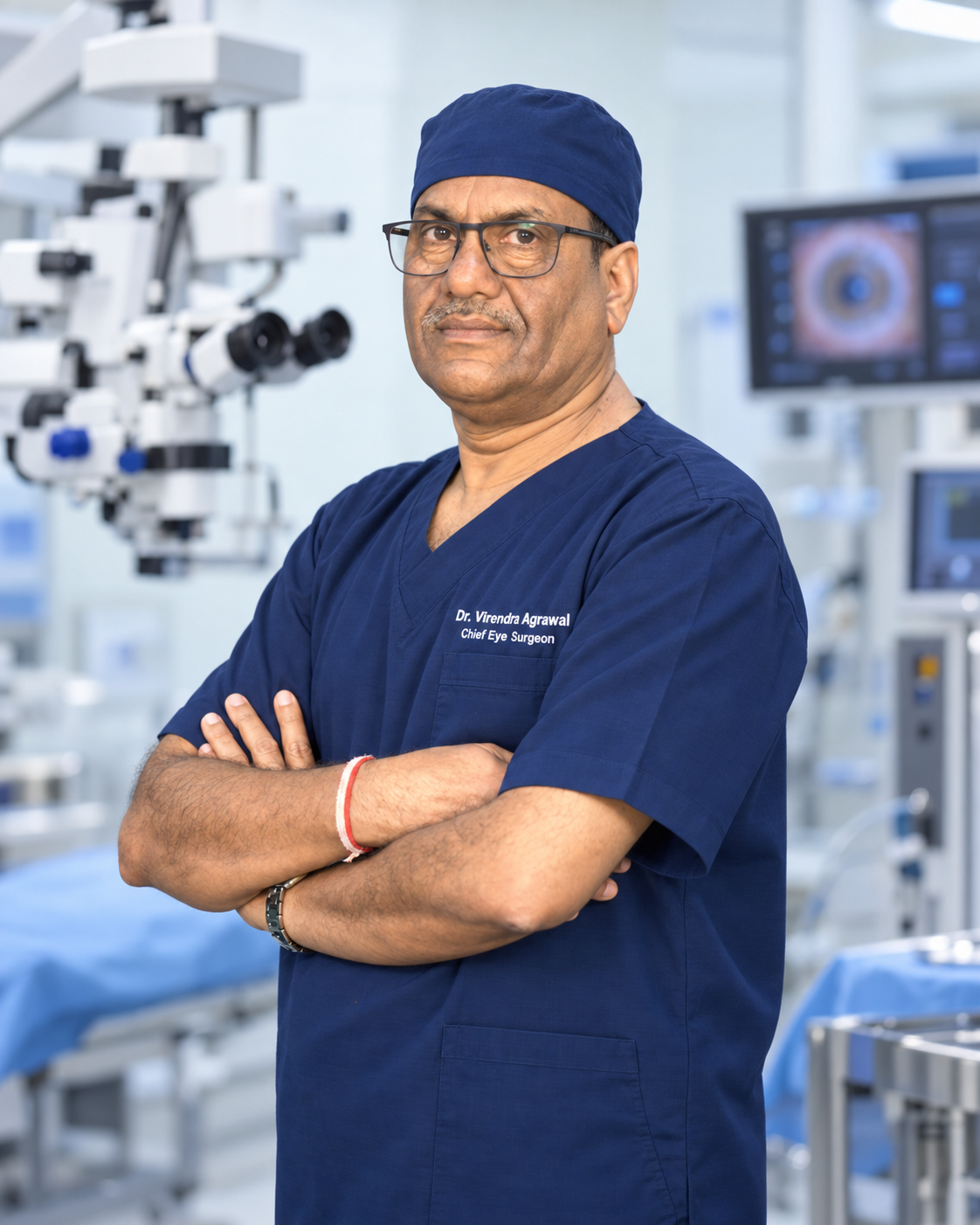
Dr. Virendra Agrawal
Medical Director & Chief Consultant — Cataract & Refractive Surgery. MD (Ophthalmology), DNB, MNAMS, FAICO (Cataract & Refractive Surgery) — Bodh Raj Sabarwal Gold Medalist (AIIMS, New Delhi) · Experience: 30+ Years of Ophthalmology
Every eye is different. The right procedure is the one that fits your cornea, your lens, your retina and the way you use your vision every day — not the one that is most advertised. Technology supports the decision; it never replaces the clinical evaluation.
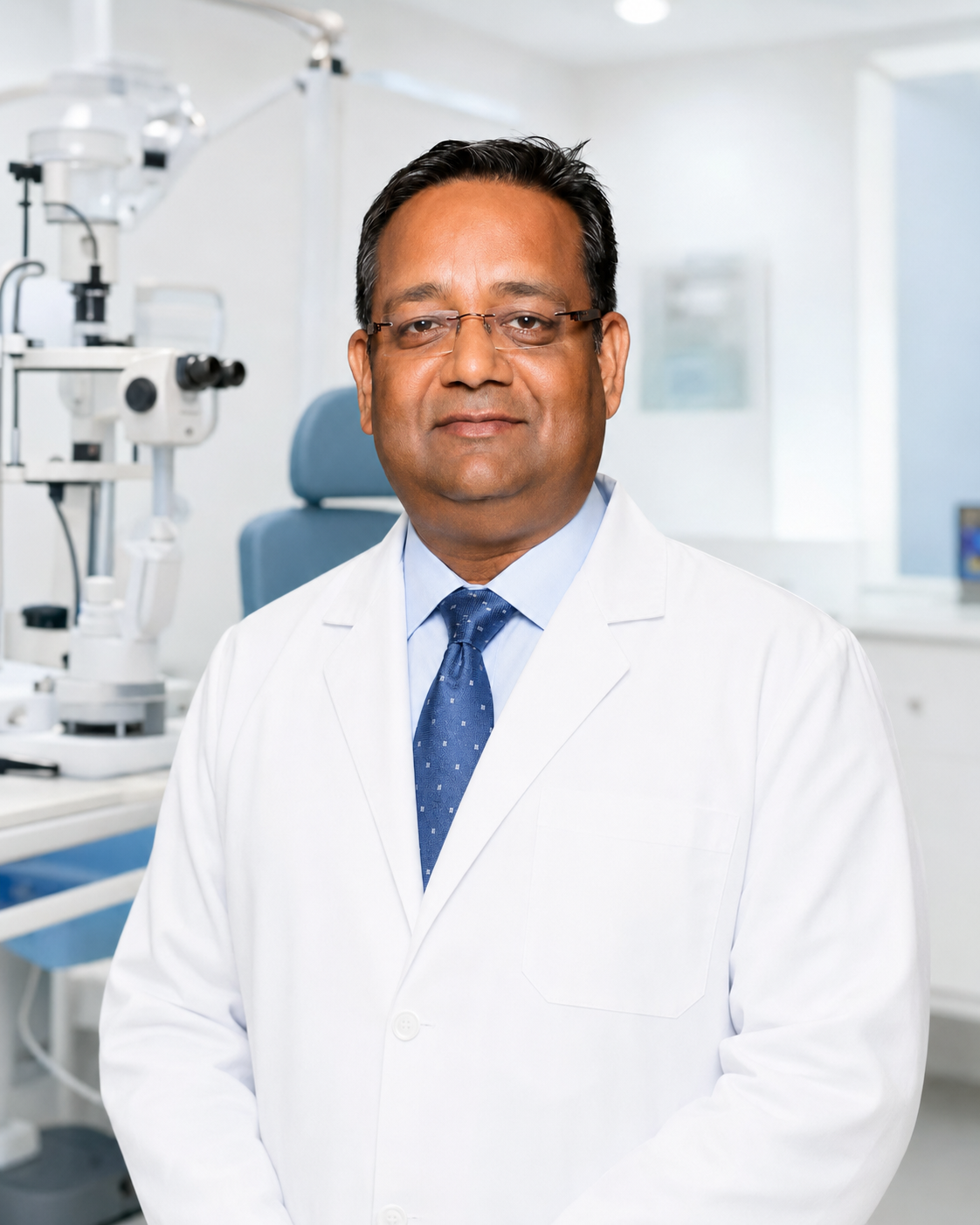
Dr. Amit Mishra
Senior Consultant — Cataract, Refractive & Glaucoma. MBBS, MS (Ophthalmology) · Experience: 25+ Years of Ophthalmology
Advanced eye care is a balance of proven surgical technique and ongoing learning. Every patient deserves a careful evaluation, a clear explanation of options and a treatment plan built around their individual vision and eye health.
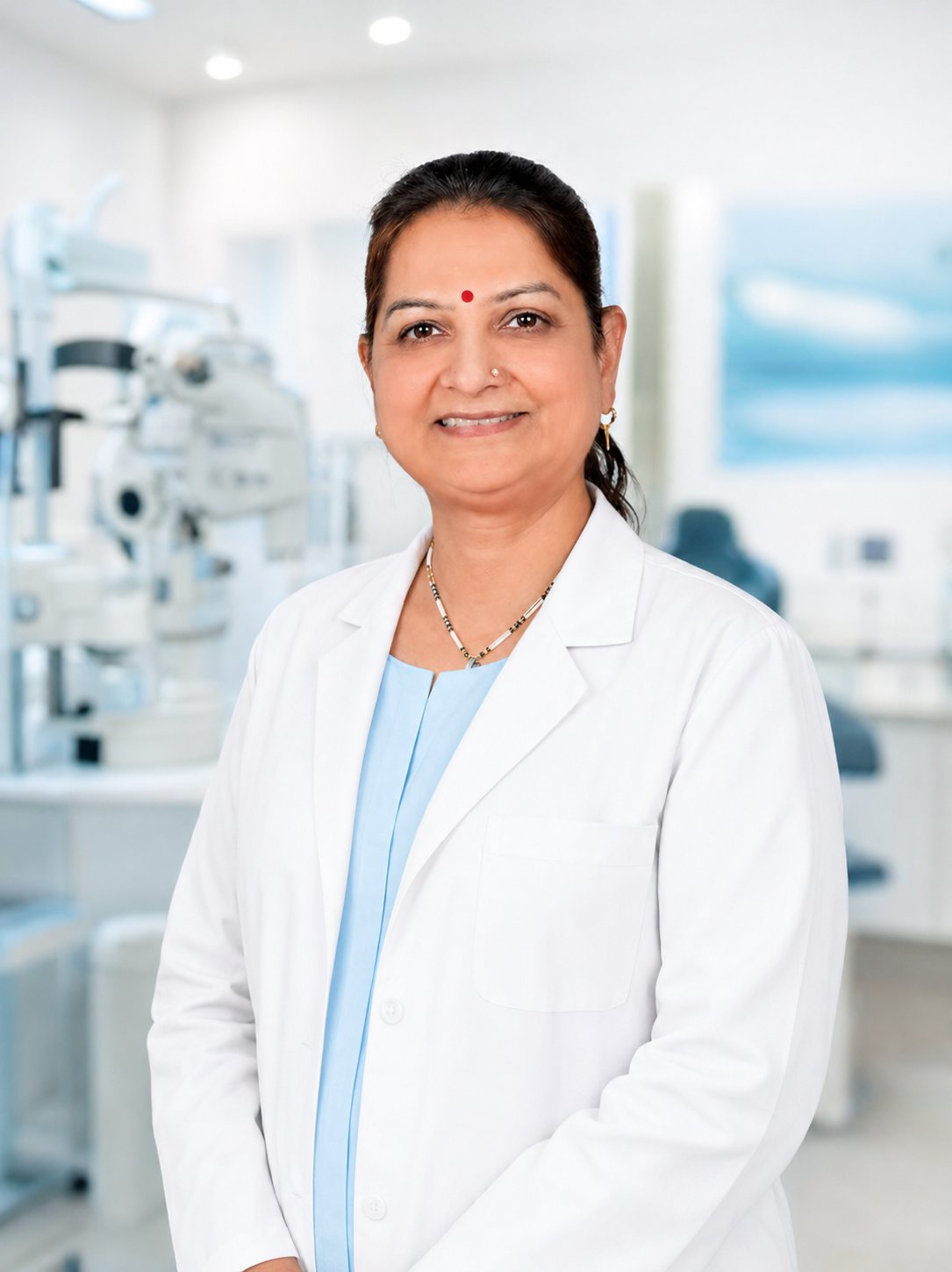
Dr. Anita Agarwal
Director & Senior Consultant Ophthalmologist — Cataract, Cornea, LASIK & Refractive Surgery Specialist. MBBS, MS (Ophthalmology) — Gajra Raja Medical College, Gwalior; Fellowship in Anterior Segment Microsurgery — Aravind Eye Hospital, Madurai; Advanced LASIK Training — USA · Experience: Nearly 30 Years of Ophthalmology
Every patient deserves a thorough evaluation before any treatment is recommended. The right solution is the one that fits your eyes, your vision needs and your daily life — chosen after careful clinical assessment, never assumed.

Dr. Neha Pathak
Consultant Cornea Specialist. MBBS, MS (Ophthalmology) — Fellowship in Cornea & General Ophthalmology, Aravind Eye Hospital, Madurai · Experience: 11+ Years of Ophthalmology
Surgical excellence, patient safety, evidence-based decision-making and personalised care — with an emphasis on choosing the right treatment for every individual patient.
Related technology
Refractive
ZEISS VISUMAX 800 with SMILE pro
Creates and separates a corneal lenticule through a small incision for SMILE pro vision correction.
SMILE pro →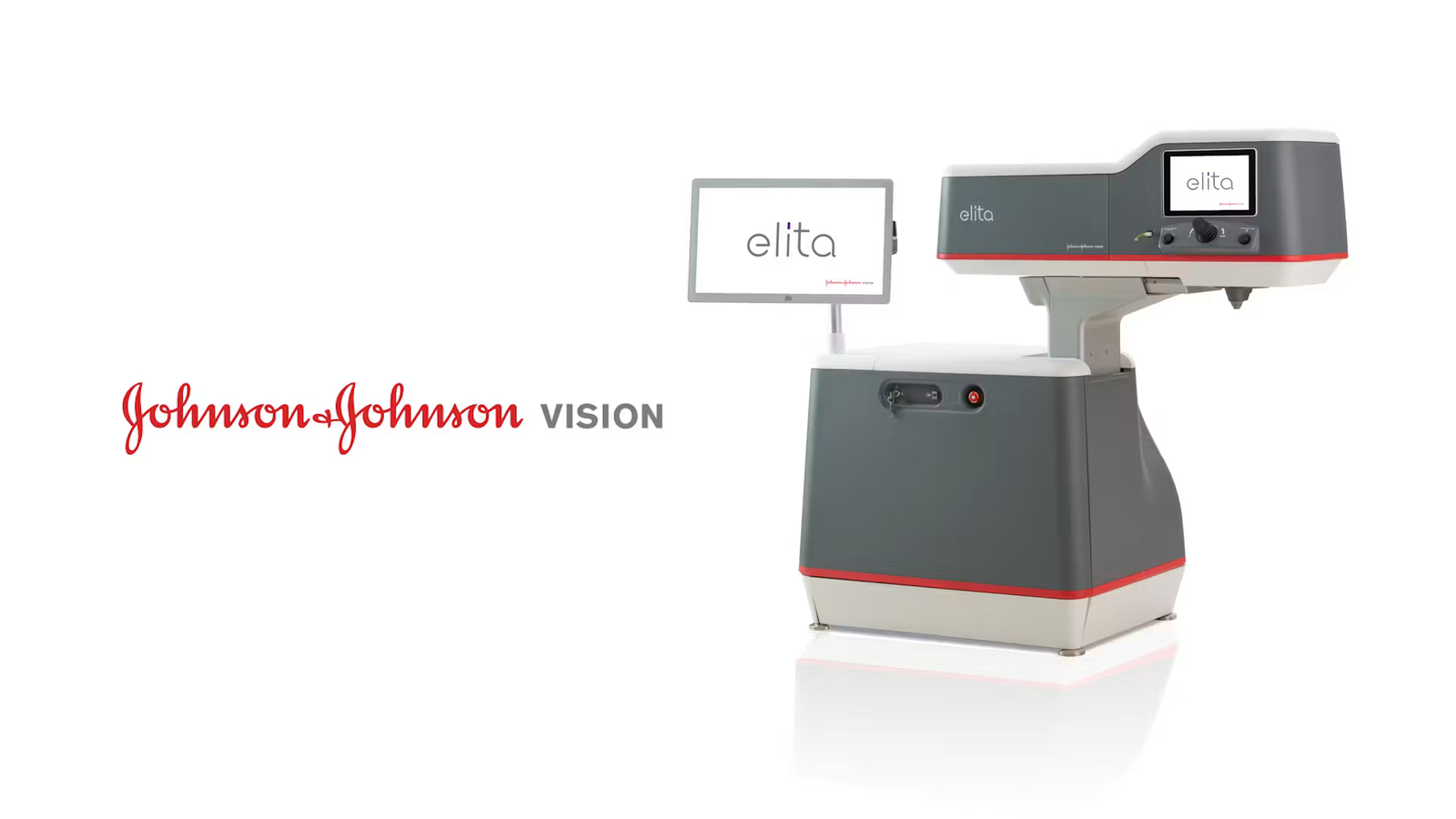
Refractive
Johnson & Johnson Vision's ELITA SiLK
Creates a biconvex lenticule for SiLK (Smooth Incision Lenticular Keratomileusis).
SiLK →Patient reviews from Google
Verified public Google reviews for Perfect Vision Laser Eye Hospital – Dr. Virendra Laser Phaco Surgery Centre, Jaipur. Reviews are individual patient opinions and are not a guarantee of similar results.
“#SMILEforeyes First of all very grateful to Dr. Virendra Agarwal and his team for being so supportive and helpful at the critical stage of my life when my hand was fractured in an accident, it was quite arduous to perform surgery but still it was done very well. Opted the SMILE surgery (bladeless, painless, flapless, conducted using top notch technology) and within a month, I am back to the normal routine which is quite impressive. And even after surgery they take care of your eyes by doing follow ups. Not the solo in my family to gone through the SMILE via Dr. Virendra Agarwal and all have the same answer "It's perfect". I highly highly recommend Dr. Virendra Agarwal and his team.”
“It has been 2 months since I have got my Smile advance done from Dr. Virendra laser phaco surgery eye hospital. I cannot believe it would be that easy to get my normal eyesight back from -4.5 both eyes in just two days. I would like to extend a big thanks to team Dr. Virendra agrawal and especially Mr and Mrs. Agarwal, you have always recommended best for me, I am very grateful to both of you. Experience in the entire operation was hassel free and effortless, entire team was extremely helpful and cooperative throughout. I would also like to compliment on the excellent services and advanced technology. Here’s wishing you all the best for your endeavors in the coming year!”
“I came from bharatpur to get smile pro with Ai laser vision correction for specs removal at Perfect Vision Laser Eye Hospital Dr. Virendra agrawal sir My whole experience was satisfied . The staff was very helpful supportive The procedure was comfortable , quick only 10 mins so well guided that I felt confident throughout . I truly felt this one of the most advanced eye laser hospital , also very grateful to dr. Virendra agrawal for giving me such a wonderful experience along with confidence and new vision . I am very highly recommend to all people if you want to experience the best care in eyes hospital in all over india . I am fully satisfied with this doctor and hospital 👍”
Relevant articles
Frequently Asked Questions
Related treatments
Carl ZEISS VISUMAX 800 SMILE pro with AI
Advanced flap-free vision correction, supported by intelligent digital guidance.
Read moreSiLK
A lenticule-based, flapless refractive procedure using a biconvex lenticule design.
Read moreLASIK & Femto-LASIK
Established flap-based laser vision correction options for suitable refractive errors.
Read morePRK / Epi-LASIK
Surface-based laser correction, often considered when a flap-based procedure is not advisable.
Read moreStart with a Detailed Suitability Assessment
Visit Perfect Vision Laser Eye Hospital, Jaipur, to understand your eyes, explore suitable procedures and make an informed decision about spectacle removal.