

Vision correction with an implantable lens—preserving your natural lens and avoiding corneal tissue removal.
Implantable Collamer Lens (ICL) at Perfect Vision Laser Eye Hospital, Jaipur
Perfect Vision Laser Eye Hospital – Dr. Virendra Laser Phaco Surgery Centre, Jaipur, offers Implantable Collamer Lens surgery for eligible patients seeking less dependence on spectacles and contact lenses.
ICL may be an option for patients with higher spectacle powers or those whose corneal measurements make laser vision correction less suitable. A detailed assessment determines whether the procedure is appropriate for your eyes.
1. What is an Implantable Collamer Lens?
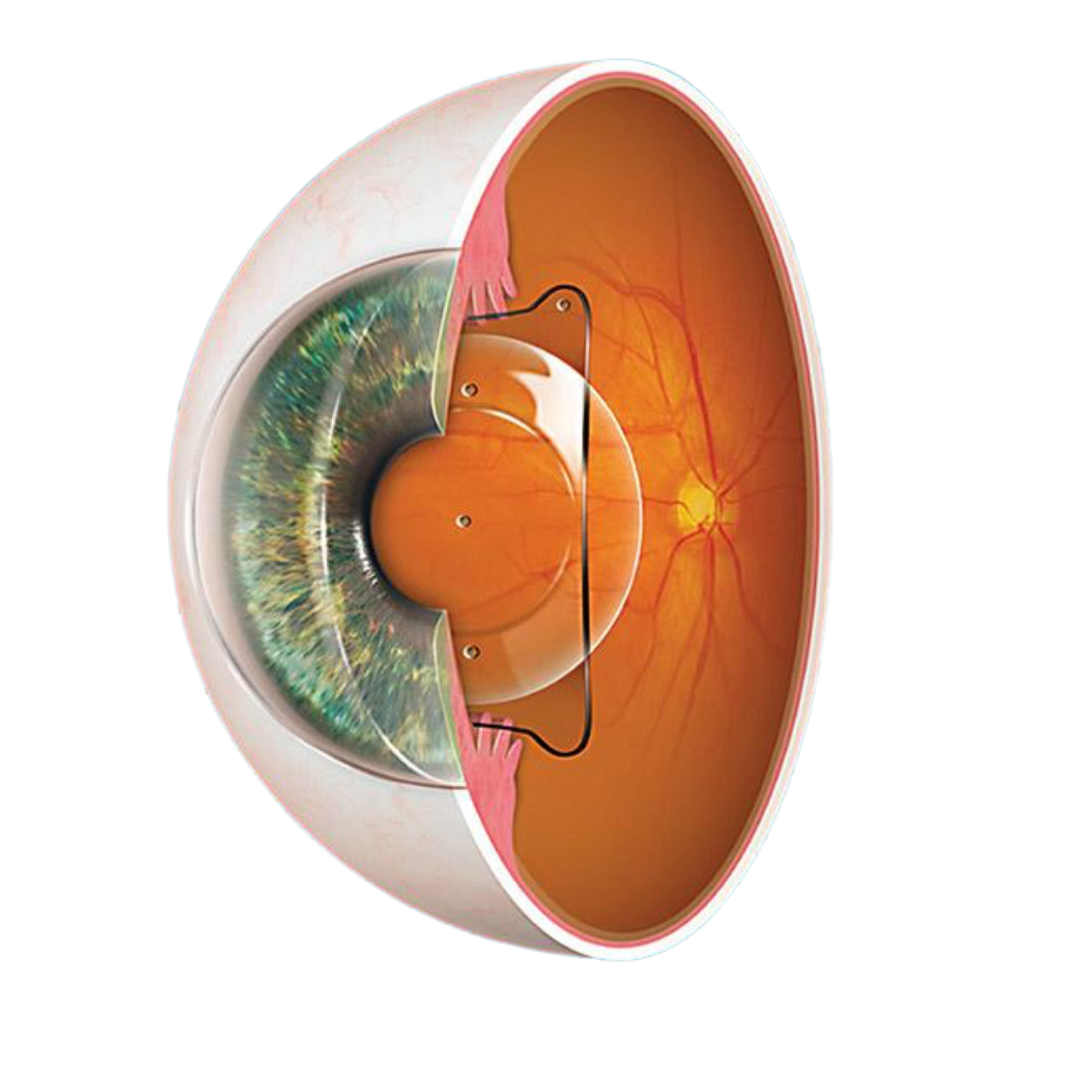
An Implantable Collamer Lens, commonly called an ICL, is a thin, flexible lens placed inside the eye to correct selected refractive errors.
The lens sits behind the iris—the coloured part of the eye—and in front of the natural crystalline lens. It works with the eye’s existing optical system to help focus light more accurately on the retina.
ICL is made from Collamer, a soft, biocompatible material containing collagen. Unlike an everyday contact lens, it remains inside the eye and does not require daily insertion, removal or cleaning.
2. What makes ICL different?
Vision correction by adding a lens
ICL changes the eye’s focusing power by adding a lens. It does not remove corneal tissue to reshape the eye, although a small surgical incision is needed for implantation.
Your natural lens remains in place
ICL surgery preserves the natural crystalline lens. This distinguishes it from cataract surgery and refractive lens exchange, which replace the natural lens.
An option for selected higher prescriptions
ICL may be considered when the amount of corneal tissue removal required for laser correction would be unsuitable. Eligibility still depends on the internal dimensions and health of the eye.
Lens power and size selected for your eyes
Your surgeon uses detailed measurements to select the appropriate lens model, power and size. Correct sizing and positioning are central to treatment planning.
Removable when medically necessary
An ophthalmic surgeon can remove or exchange an ICL if required. This involves another operation and does not mean the original procedure is completely reversible or free of lasting effects.
Implantable Collamer Lens (ICL) video
Watch this ICL video from Perfect Vision Laser Eye Hospital on Facebook.
Watch on Facebook3. What vision problems can ICL address?
The prescription that can be treated depends on the specific lens model and its approved use.
| Vision concern | How ICL may help |
|---|---|
| Myopia—minus power | An appropriate ICL can correct short-sightedness in eligible patients. |
| Astigmatism—cylindrical power | A toric ICL can address suitable cylindrical power alongside the associated refractive error. |
| Hyperopia—plus power | Selected lens models may address hyperopia, subject to availability, approval and eye measurements. |
| Presbyopia—age-related near-vision difficulty | Specialised lens designs may help selected patients. Standard distance-correction ICLs do not automatically remove the need for reading glasses. |
Your consultation will establish which lens options are available and appropriate. Not every ICL model treats all these conditions.
4. How does ICL compare with LASIK, Femto-LASIK and PRK?
| Feature | ICL | Conventional LASIK | Femto-LASIK | PRK |
|---|---|---|---|---|
| Method | Adds a lens inside the eye. | Creates a flap with a microkeratome, then reshapes the cornea with an excimer laser. | Creates a flap with a femtosecond laser, then uses an excimer laser. | Removes the surface epithelium before excimer laser reshaping. |
| Corneal tissue removed for correction | No. | Yes. | Yes. | Yes. |
| Corneal flap | No. | Yes. | Yes. | No. |
| Implant inside the eye | Yes. | No. | No. | No. |
| Main suitability considerations | Internal eye space, endothelial cell health, lens sizing and prescription. | Corneal shape, thickness, prescription and eye health. | Corneal shape, thickness, prescription and eye health. | Corneal shape, thickness, surface healing and eye health. |
| Distinctive consideration | Intraocular surgery requiring ongoing monitoring of the implant and eye health. | Flap-related considerations and sufficient remaining corneal tissue. | Laser-created flap still requires appropriate corneal suitability. | Usually a longer initial recovery while the surface heals. |
Each approach has its own benefits and risks. Your surgeon will recommend suitable options based on examination findings and your visual needs.
5. How does ICL surgery work?
Detailed assessment
Your surgeon evaluates your prescription, eye health and internal eye measurements. The consultation includes expected outcomes, alternatives and potential risks.
Lens selection and planning
The appropriate lens model, power and size are selected. If a toric lens is needed, its rotational alignment is included in the treatment plan.
Preparation
Anaesthetic eye drops and other medication are administered as appropriate. The surgical team explains what to expect.
Small incision
Your surgeon creates a small opening near the edge of the cornea to introduce the folded lens.
Implantation and positioning
The ICL is gently inserted and positioned behind the iris, in front of the natural lens. The surgeon checks its placement and, where relevant, toric alignment.
Postoperative checks
The team checks your eye after treatment and provides instructions for drops and follow-up. The incision usually seals without stitches, although surgical requirements can vary.
6. Benefits for patients
Less dependence on spectacles and contact lenses
ICL aims to improve vision without everyday corrective lenses. Some patients may still need glasses for particular activities or residual prescription.
Preservation of corneal tissue
The correction does not require removal of corneal tissue. This can make ICL worth considering for selected patients who are unsuitable for corneal laser treatment.
Retention of the natural lens
The natural lens remains in place, preserving its existing function. Age-related changes can still occur over time.
Convenience without daily lens handling
Once healing is complete, the implanted lens does not require the daily care routine associated with external contact lenses.
Potential for early visual improvement
Many patients notice improvement soon after surgery. Vision may fluctuate during healing, and the time to comfortable, stable vision varies.
7. Who may be suitable?
- A stable prescription.
- A refractive error within the selected lens model’s treatment range.
- Sufficient space inside the eye for the implant.
- Adequate corneal endothelial cell health.
- A suitable natural lens and overall eye health.
- Realistic expectations and willingness to attend follow-up appointments.
A thin cornea or high spectacle power does not automatically establish eligibility.
8. Diagnostic tests and evaluation
- Vision testing and prescription measurement.
- Corneal topography or tomography.
- Anterior chamber depth and angle assessment.
- Endothelial cell count.
- Measurements used for lens sizing.
- Eye-pressure measurement.
- Examination of the natural lens.
- Dilated retinal examination, particularly where indicated by myopia or symptoms.
These tests help your surgeon assess whether the implant can sit safely within your eye.
9. Who may need another approach?
An unstable prescription, insufficient internal eye space, inadequate endothelial cell count, certain types of glaucoma, cataract or active inflammation may make ICL inappropriate.
Pregnancy, breastfeeding and other medical circumstances may require postponement. Your surgeon will assess the relevance of your medical history and medications.
10. Risks and limitations
ICL is surgery inside the eye and carries potentially serious risks.
Possible complications include increased eye pressure, inflammation, cataract formation and loss of corneal endothelial cells. Lens repositioning, exchange or removal may sometimes be necessary.
Residual prescription and visual disturbances can occur, and no procedure guarantees 6/6 vision or lifelong freedom from glasses. Your surgeon will explain the risks relevant to your eyes and the selected lens.
11. Preparation before treatment
- Bring previous prescriptions and relevant medical reports.
- Follow instructions about stopping contact-lens wear before measurements.
- Inform the team about medication, allergies and medical conditions.
- Follow the clinic’s instructions about makeup and preparation.
- Arrange an attendant and transport home.
12. Recovery, aftercare and long-term follow-up
- Use prescribed drops exactly as directed. Avoid rubbing or pressing on your eyes and follow instructions about bathing, makeup, exercise and swimming.
- Attend early reviews so your surgeon can check eye pressure, lens position and recovery. Continue periodic eye examinations even when your vision feels clear.
- Seek urgent assessment for increasing pain, marked redness, sudden loss of vision, new flashes or floaters, or a curtain-like shadow in your vision.
Why choose Perfect Vision Laser Eye Hospital, Jaipur?
- Led by Dr. Virendra Agrawal, MD (Ophthalmology), AIIMS New Delhi, with a full-time specialist team
- Diagnosis-first approach with advanced imaging before any recommendation
- Comprehensive eye services available at one Jaipur centre
- Support for patients travelling from across Rajasthan and outside the state
- Cashless Mediclaim assistance, subject to your policy terms
Your specialists
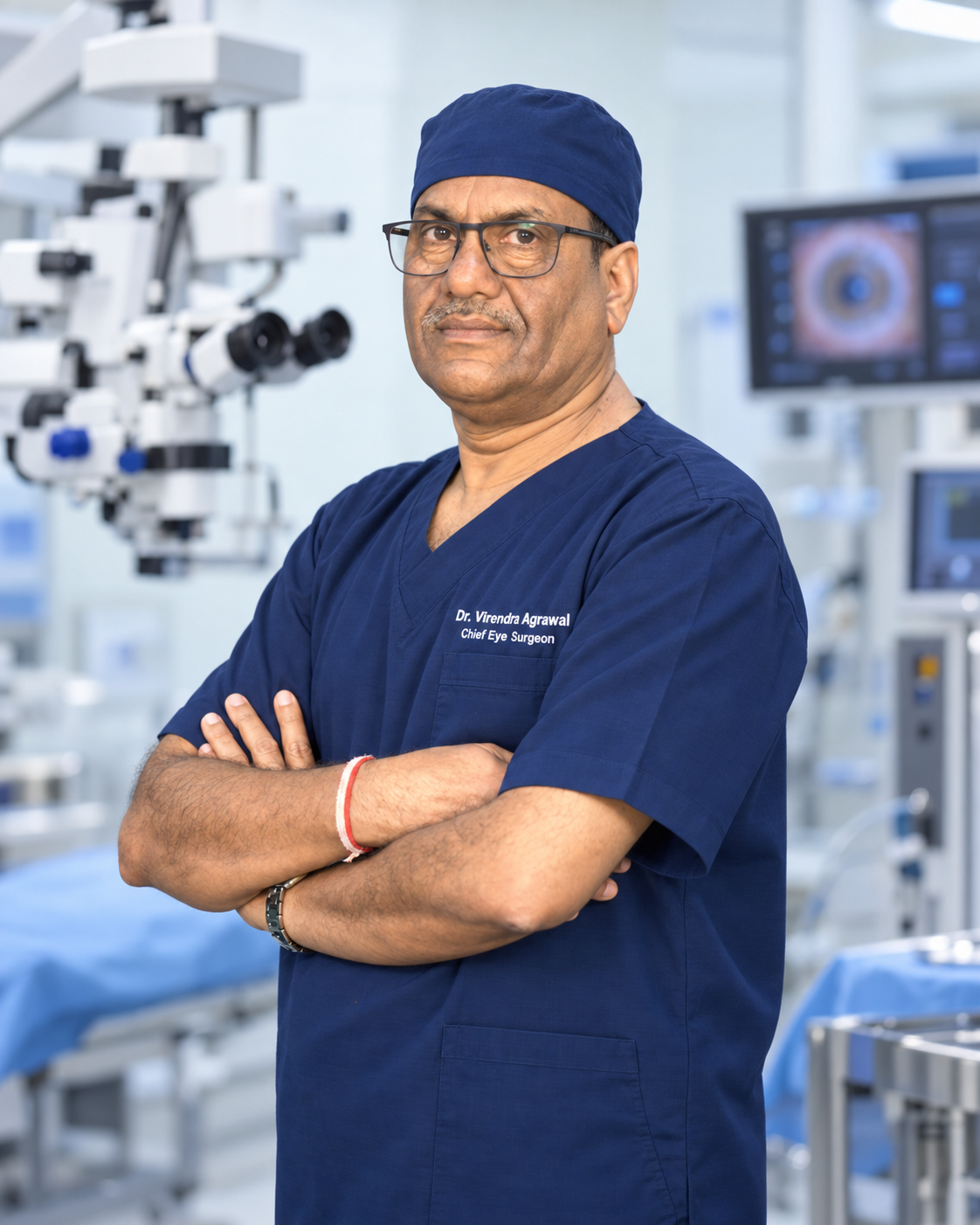
Dr. Virendra Agrawal
Medical Director & Chief Consultant — Cataract & Refractive Surgery. MD (Ophthalmology), DNB, MNAMS, FAICO (Cataract & Refractive Surgery) — Bodh Raj Sabarwal Gold Medalist (AIIMS, New Delhi) · Experience: 30+ Years of Ophthalmology
Every eye is different. The right procedure is the one that fits your cornea, your lens, your retina and the way you use your vision every day — not the one that is most advertised. Technology supports the decision; it never replaces the clinical evaluation.

Dr. Amit Mishra
Senior Consultant — Cataract, Refractive & Glaucoma. MBBS, MS (Ophthalmology) · Experience: 25+ Years of Ophthalmology
Advanced eye care is a balance of proven surgical technique and ongoing learning. Every patient deserves a careful evaluation, a clear explanation of options and a treatment plan built around their individual vision and eye health.

Dr. Anita Agarwal
Director & Senior Consultant Ophthalmologist — Cataract, Cornea, LASIK & Refractive Surgery Specialist. MBBS, MS (Ophthalmology) — Gajra Raja Medical College, Gwalior; Fellowship in Anterior Segment Microsurgery — Aravind Eye Hospital, Madurai; Advanced LASIK Training — USA · Experience: Nearly 30 Years of Ophthalmology
Every patient deserves a thorough evaluation before any treatment is recommended. The right solution is the one that fits your eyes, your vision needs and your daily life — chosen after careful clinical assessment, never assumed.

Dr. Neha Pathak
Consultant Cornea Specialist. MBBS, MS (Ophthalmology) — Fellowship in Cornea & General Ophthalmology, Aravind Eye Hospital, Madurai · Experience: 11+ Years of Ophthalmology
Surgical excellence, patient safety, evidence-based decision-making and personalised care — with an emphasis on choosing the right treatment for every individual patient.
Related technology
Refractive
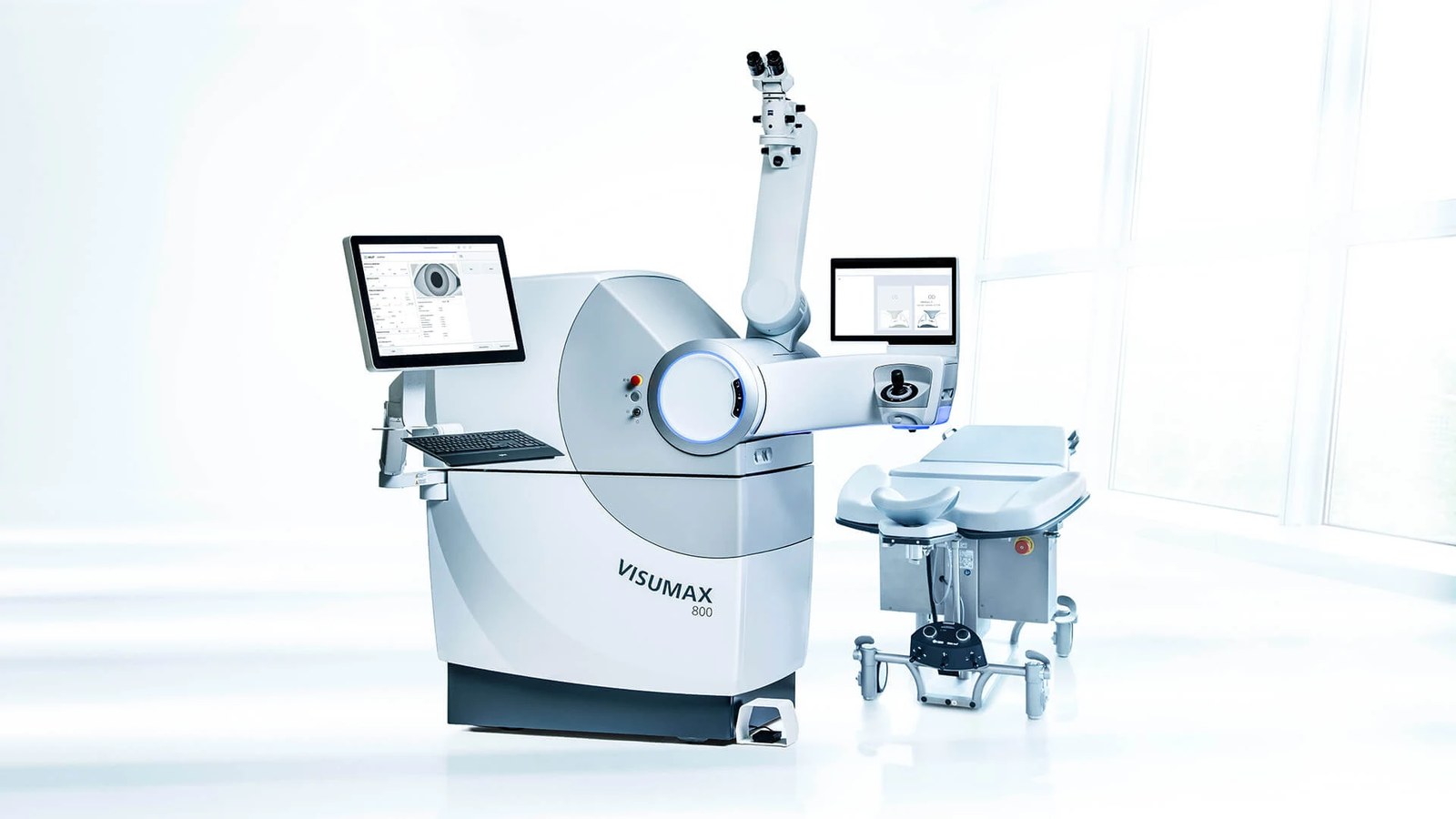
ZEISS VISUMAX 800 with SMILE pro
Creates and separates a corneal lenticule through a small incision for SMILE pro vision correction.
SMILE pro →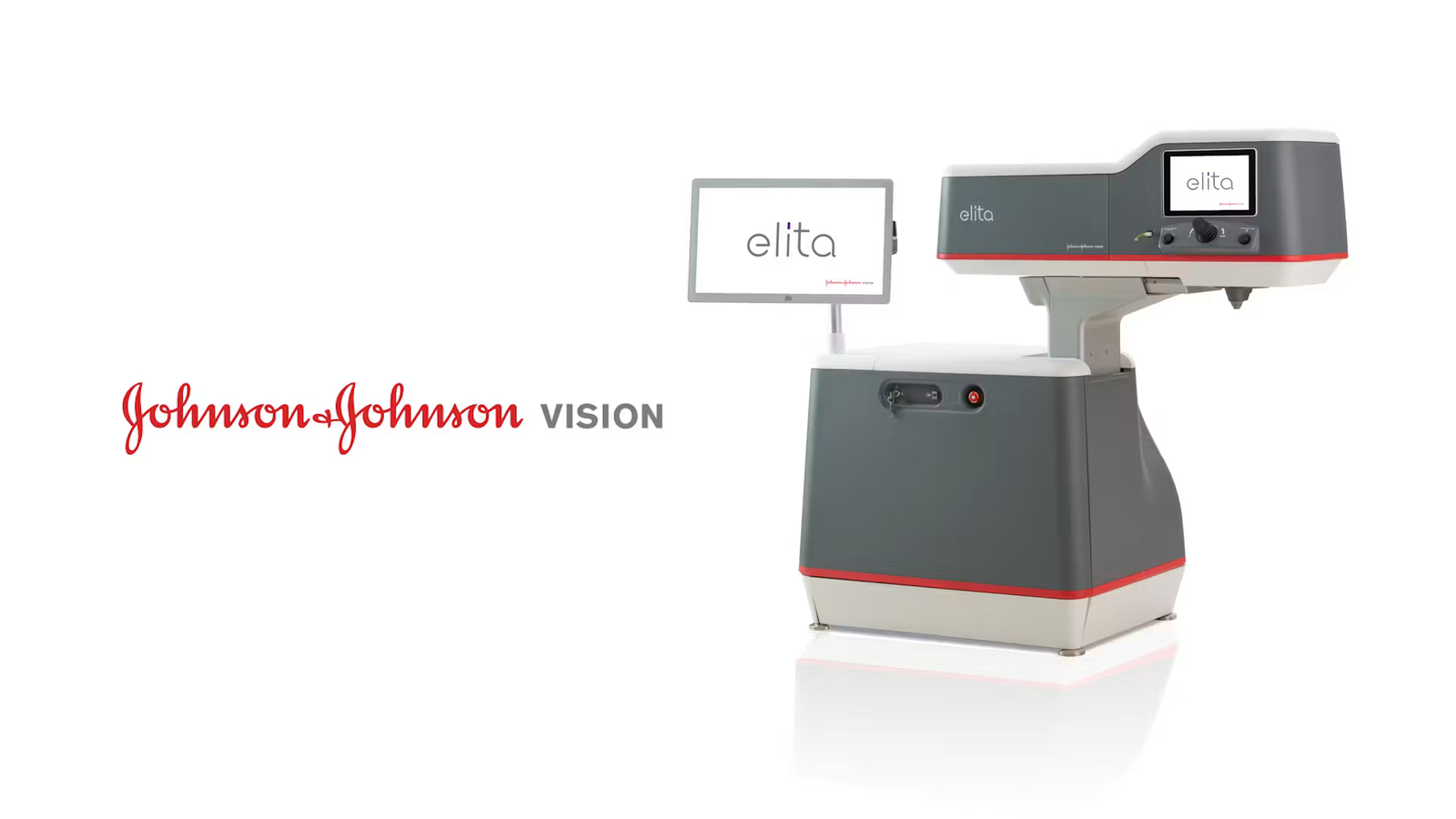
Refractive
Johnson & Johnson Vision's ELITA SiLK
Creates a biconvex lenticule for SiLK (Smooth Incision Lenticular Keratomileusis).
SiLK →Patient reviews from Google
Verified public Google reviews for Perfect Vision Laser Eye Hospital – Dr. Virendra Laser Phaco Surgery Centre, Jaipur. Reviews are individual patient opinions and are not a guarantee of similar results.
“I was skeptical about ICL surgery as it's pretty new and I was not sure if I should try it. However, Dr. Virendra has done a tremendous job. I had a very high myopia and now I'm free from glasses. The process took literally 10 mins and I could see just after the process and within a week, everything recovered, giving my an awesome vision. My uncle had laser surgery almost 15 years back and he still thank Dr. Virendra for that. No problem faced so far. Freedom from fear, freedom from spectacles. Thanks a ton for giving me freedom from my glasses. PS: Their insurance desk is also very smooth. Helped me with no hassle at all. My before and after pics are attached.”
“I underwent ICL eye surgery in January last year with Dr. Virendra Agarwal, and I couldn’t be happier with the results. He is truly one of the best doctors in Jaipur, combining expertise with a patient-centric approach. From the initial consultation to post-surgery care, he ensured that I was well-informed and comfortable throughout the process. The surgery was smooth, and my vision has improved beyond expectations. I highly recommend Dr. Virendra Agarwal for anyone considering vision correction—his precision, professionalism, and compassionate care make all the difference!”
“I successfully had my ICL surgery done from Dr Virendra sir and all i could say is that you can totally rely on this eye surgery centre! My vision is now perfect thanks to the skills and expertise Dr. Virendra has in his respective feild. The staff is really responsive and care about their patients well being. My personal experience was great, and if you are planning to have your regular eye check up or surgery, you can surely go here without any second thoughts!”
Relevant articles
13. Frequently asked questions
Related treatments
Specs Removal Overview
A complete overview of the spectacle removal options available at Perfect Vision Laser Eye Hospital, Jaipur, and how the right one is selected for each eye.
Read moreCarl ZEISS VISUMAX 800 SMILE pro with AI
Advanced flap-free vision correction, supported by intelligent digital guidance.
Read moreSiLK
A lenticule-based, flapless refractive procedure using a biconvex lenticule design.
Read moreLASIK & Femto-LASIK
Established flap-based laser vision correction options for suitable refractive errors.
Read moreExplore your suitability at Perfect Vision Laser Eye Hospital, Jaipur
Book a detailed ICL assessment to understand your lens options, expected outcomes and long-term care requirements.